
Introduction
Piles, also known as hemorrhoids, are one of the most common anorectal conditions affecting millions of people worldwide. Despite being a widespread health issue, many individuals hesitate to seek medical help due to embarrassment or lack of awareness. Delayed treatment can lead to severe pain, bleeding, and complications that significantly impact daily life.
If you experience pain during bowel movements, rectal bleeding, itching, swelling, or discomfort while sitting, it may be time to consult a qualified piles specialist. In this blog, we share expert insights from Dr. Ankur Sharma (MBBS, MS, FMAS, FIAGES), a General, Laparoscopic & Laser Surgeon, explaining everything you need to know about piles treatment in India, modern laser surgery, and prevention.
What Are Piles?
Piles are swollen and inflamed veins located in the lower rectum and anus. They develop due to increased pressure in these veins, causing discomfort, pain, itching, and bleeding.
Piles can affect people of all ages, but they are more common among adults who experience chronic constipation, prolonged sitting, obesity, or pregnancy.
Types of Piles
Internal Piles
Internal hemorrhoids develop inside the rectum and usually cannot be seen or felt. They often cause painless bleeding during bowel movements.
External Piles
External hemorrhoids develop around the anus and may cause pain, swelling, itching, and discomfort, especially while sitting.
Thrombosed Piles
When blood clots form inside external hemorrhoids, they become thrombosed piles, causing severe pain and swelling that may require immediate medical attention.
Common Symptoms of Piles
Recognizing symptoms early can prevent complications.
Signs include:
- Pain during bowel movements
- Blood in stool
- Bright red bleeding after passing stool
- Itching around the anus
- Swelling near the anal opening
- Burning sensation
- Mucus discharge
- Pain while sitting
- Lump near the anus
- Incomplete bowel emptying
What Causes Piles?
Several lifestyle and medical factors increase the risk of developing piles.
Major Causes
Chronic Constipation
Frequent straining during bowel movements places excessive pressure on rectal veins.
Sitting for Long Hours
Office workers, drivers, and people with sedentary lifestyles have a higher risk.
Low-Fiber Diet
Lack of fruits, vegetables, and whole grains results in hard stools.
Pregnancy
Growing pressure inside the abdomen and hormonal changes increase the likelihood of hemorrhoids.
Obesity
Extra body weight increases pressure on pelvic veins.
Aging
Supporting tissues weaken with age, making hemorrhoids more common.
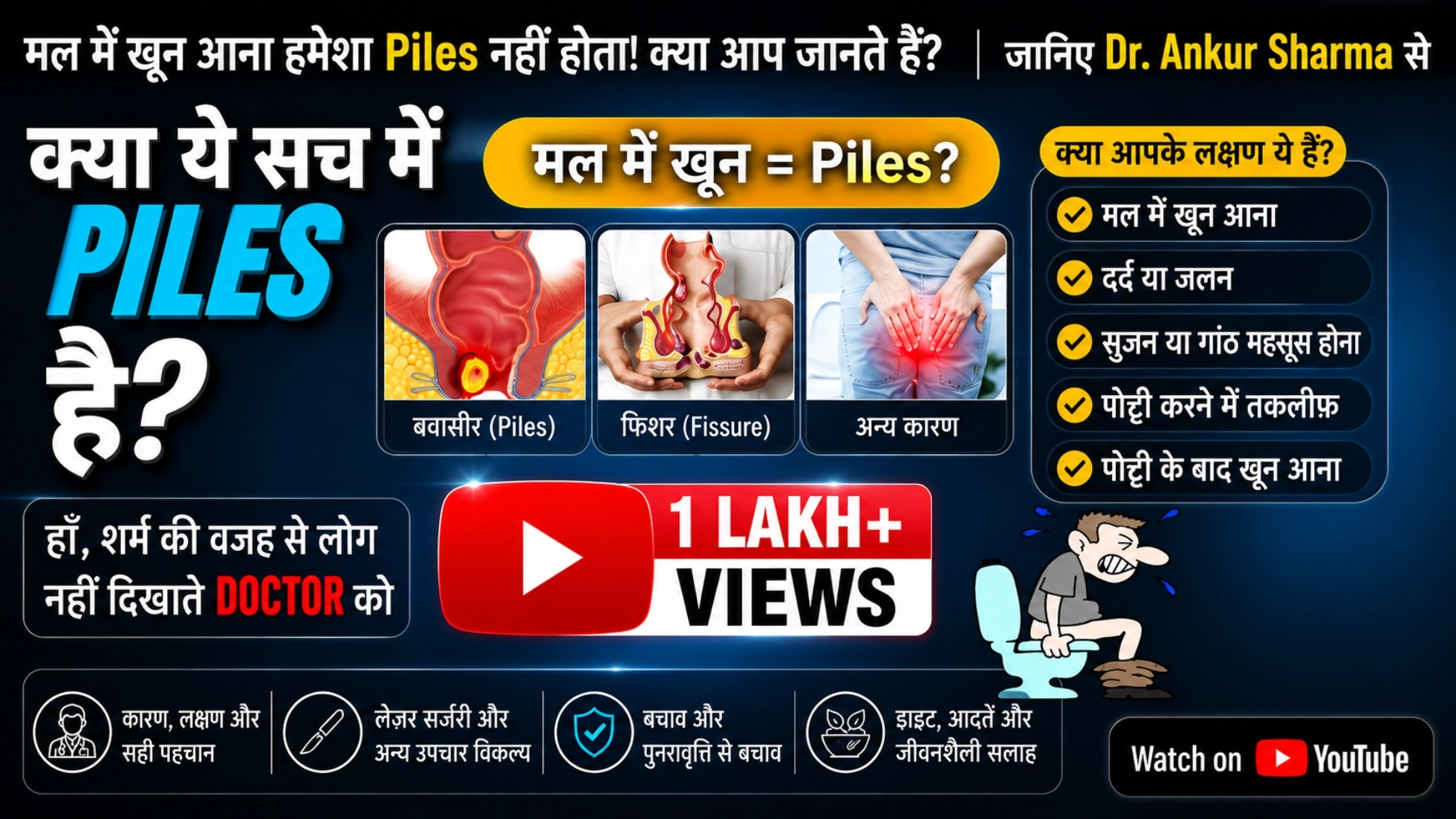
Is Blood in Stool Always Caused by Piles?
No.
Many people assume that blood in stool automatically means piles. However, rectal bleeding can also indicate:
- Anal fissures
- Colon polyps
- Inflammatory bowel disease
- Rectal infections
- Colorectal cancer
Never ignore persistent rectal bleeding. Early diagnosis is essential for proper treatment.
When Is Medication Enough?
Early-stage piles often improve with conservative treatment.
Your doctor may recommend:
- Fiber supplements
- Stool softeners
- Anti-inflammatory medicines
- Sitz baths
- Increased water intake
- Lifestyle modifications
- Regular physical activity
Many patients recover without surgery when treatment begins early.
When Is Surgery Necessary?
Surgery becomes necessary when:
- Severe bleeding continues
- Large prolapsed piles develop
- Recurrent hemorrhoids occur
- Pain becomes unbearable
- Blood clots form
- Medical treatment fails
Consulting an experienced piles surgeon helps determine the most suitable treatment.
Laser Surgery vs Traditional Piles Surgery
Laser Surgery
Laser piles surgery has become one of the most preferred treatment options.
Benefits
- Minimally invasive
- Less pain
- Minimal bleeding
- Faster recovery
- Short hospital stay
- Quick return to work
- Lower infection risk
Traditional Surgery
Conventional hemorrhoid surgery is still recommended in selected advanced cases.
Advantages
- Effective for large piles
- Suitable for complex cases
- Long-term relief when indicated
Your surgeon will recommend the most appropriate procedure based on your condition.
Can Piles Come Back?
Yes.
Piles may recur if healthy habits are not maintained after treatment.
Prevention Tips
Eat a High-Fiber Diet
Include:
- Fruits
- Green vegetables
- Whole grains
- Oats
- Salads
- Lentils
Drink Plenty of Water
Aim for 2–3 liters daily.
Exercise Regularly
Walking and light physical activity improve bowel function.
Avoid Prolonged Sitting
Take short breaks every hour.
Do Not Delay Bowel Movements
Ignoring the urge to pass stool increases constipation.
Avoid Excessive Straining
Relax and avoid prolonged sitting on the toilet.
When Should You See a Piles Doctor?
Consult a specialist immediately if you experience:
- Blood during bowel movements
- Severe anal pain
- Persistent constipation
- Swelling near the anus
- Recurring piles
- Difficulty sitting
- Symptoms lasting more than a few days
Early diagnosis often prevents surgery.
Expert Opinion by Dr. Ankur Sharma
According to Dr. Ankur Sharma (MBBS, MS, FMAS, FIAGES), most patients delay treatment due to embarrassment, allowing the disease to progress. Modern laser surgery has transformed piles treatment by offering less pain, faster healing, and quicker recovery. However, the best treatment depends on the stage of piles and the patient’s overall health.
Frequently Asked Questions (FAQs)
Is laser surgery painful?
Laser surgery generally causes significantly less pain than traditional surgery and allows faster recovery.
How long does recovery take?
Most patients resume normal activities within a few days, depending on the procedure.
Can constipation cause piles?
Yes. Chronic constipation is one of the leading causes of hemorrhoids.
Is blood in stool always due to piles?
No. It may indicate other serious conditions and should always be evaluated by a doctor.
Can piles be prevented?
Yes. A high-fiber diet, hydration, exercise, and healthy bowel habits greatly reduce the risk.
Conclusion
Piles are a common but treatable condition. Ignoring symptoms such as pain, bleeding, or swelling can lead to complications. Early consultation with a qualified specialist ensures accurate diagnosis and the most effective treatment. Whether medication or advanced laser surgery is required, timely care can help you return to a pain-free and healthy life.
If you or a loved one is experiencing symptoms of piles, don’t ignore them. Seek expert medical advice and begin treatment before the condition worse.