
Introduction
Breast cancer is one of the most common cancers affecting women worldwide. Among all breast cancer cases, nearly 40–70% are Hormonal Receptors Positive (ER/PR Positive). This means that the cancer cells grow in response to hormones like estrogen and progesterone. Understanding this type of breast cancer helps patients make informed decisions about treatment and long-term recovery.
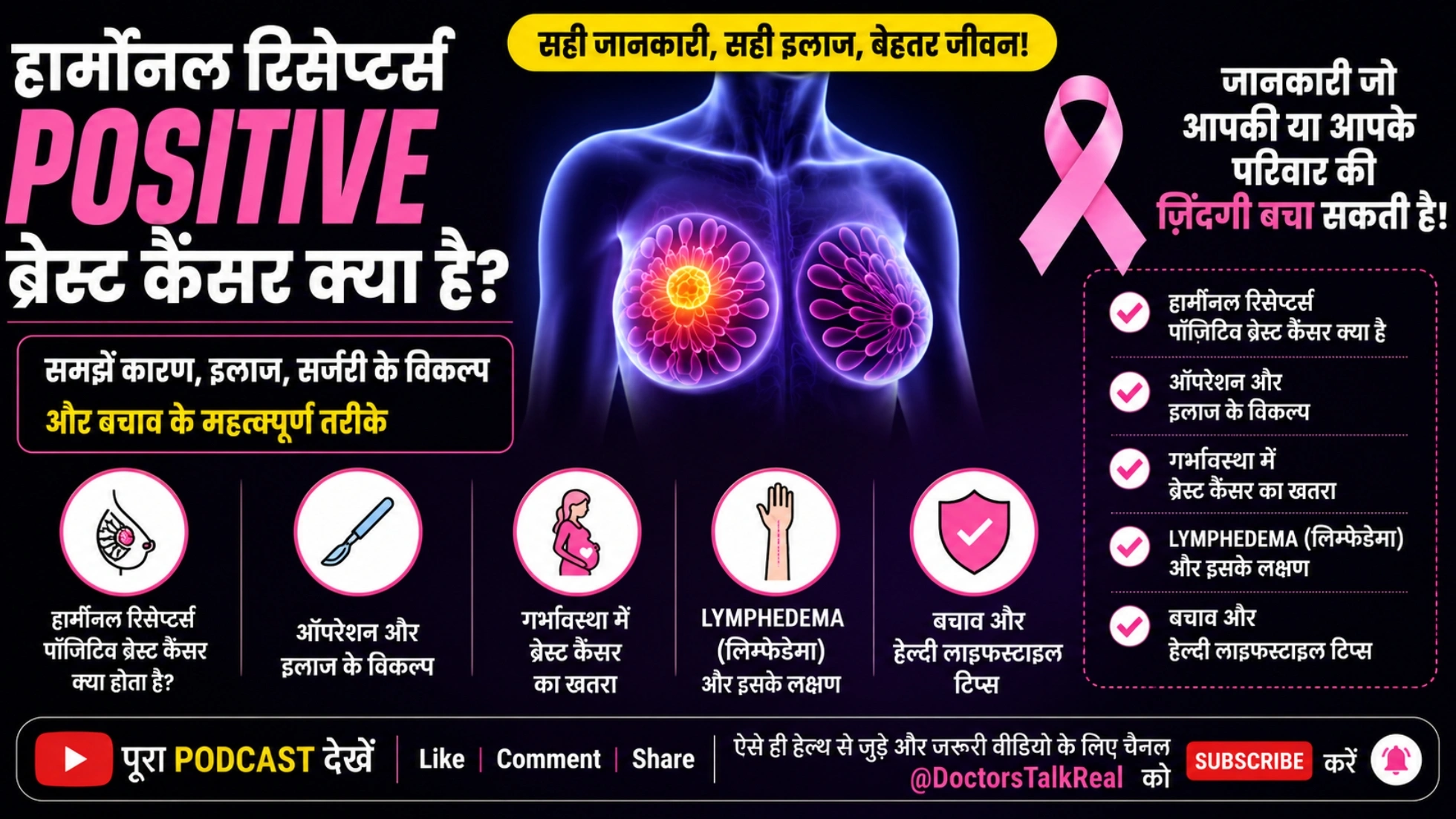
In the latest DoctorsTalkReal podcast, Dr. Yashashvi Choudhary, a Breast Cancer Specialist, explains everything you need to know about Hormonal Receptors Positive Breast Cancer, treatment options, pregnancy-related concerns, lymphedema, and healthy lifestyle practices. Hormonal Receptors Positive Breast Cancer is a serious problem
What is Hormonal Receptors Positive Breast Cancer?
Hormonal Receptors Positive Breast Cancer occurs when breast cancer cells contain receptors that respond to female hormones such as estrogen (ER) or progesterone (PR). These hormones can stimulate cancer cell growth, making hormone therapy an important part of treatment.
Fortunately, this type of breast cancer often responds well to targeted hormonal therapies, leading to better long-term outcomes when diagnosed early.
Understanding ER Positive and PR Positive Breast Cancer
Estrogen Receptor (ER) Positive
ER Positive breast cancer means the cancer cells use estrogen to grow. Hormone-blocking medications can significantly reduce the risk of recurrence.
Progesterone Receptor (PR) Positive
PR Positive breast cancer responds to progesterone. Patients who are both ER and PR Positive generally have more treatment options and favorable outcomes.
Common Symptoms of Hormonal Receptors Positive Breast Cancer
Early symptoms may include:
- A lump in the breast or underarm
- Changes in breast shape or size
- Skin dimpling or thickening
- Nipple discharge
- Nipple inversion
- Breast pain (less common)
- Redness or swelling
Any persistent breast change should be evaluated by a breast specialist.
How is Hormonal Receptors Positive Breast Cancer Diagnosed?
Diagnosis generally involves several investigations.
Clinical Breast Examination
A breast specialist checks for lumps and abnormal tissue changes.
Imaging Tests
- Mammography
- Breast Ultrasound
- Breast MRI (when required)
Biopsy
A tissue sample confirms the diagnosis.
Hormone Receptor Testing
Laboratory testing determines whether the tumor is ER Positive, PR Positive, or HER2 Positive, helping doctors plan the most effective treatment.
Treatment Options for Hormonal Receptors Positive Breast Cancer
Treatment depends on the cancer stage, tumor size, age, and overall health.
Surgery
Doctors may recommend:
- Breast-Conserving Surgery (Lumpectomy)
- Mastectomy
- Sentinel Lymph Node Biopsy
- Axillary Lymph Node Surgery
Hormonal Receptors Positive Harmone Therapy
Hormonal therapy blocks estrogen from stimulating cancer growth.
Common medications include:
- Tamoxifen
- Aromatase Inhibitors
- Ovarian suppression therapy (in selected patients)
Hormone therapy may continue for 5–10 years depending on individual risk.
Radiation Therapy
Radiation helps destroy any remaining cancer cells after surgery.
Chemotherapy
Some patients may require chemotherapy based on tumor biology and cancer stage.
Can Pregnancy Affect Breast Cancer?
One of the most important questions discussed in the DoctorsTalkReal podcast is pregnancy-related breast cancer.
Breast Cancer During Pregnancy
Although uncommon, breast cancer can occur during pregnancy.
Doctors carefully balance:
- Mother’s health
- Baby’s safety
- Stage of pregnancy
- Type of treatment required
Many women can safely receive treatment under specialist supervision.
What is Lymphedema?
Lymphedema is swelling that may develop after lymph node surgery or radiation therapy.
Symptoms of Lymphedema
- Arm swelling
- Tightness
- Heaviness
- Reduced movement
- Skin discomfort
Early physiotherapy and proper exercises help reduce symptoms significantly.
Healthy Lifestyle Tips After Breast Cancer Treatment
Recovery continues even after treatment ends.
Doctors recommend:
Maintain Healthy Weight
Obesity may increase recurrence risk.
Exercise Regularly
At least 30 minutes of moderate physical activity most days.
Eat a Balanced Diet
Include:
- Fresh fruits
- Vegetables
- Whole grains
- Lean protein
Avoid Smoking and Alcohol
These lifestyle changes improve overall health and recovery.
Attend Regular Follow-Ups
Routine checkups help detect recurrence early.
Can Hormonal Receptors Positive Breast Cancer Be Cured?
Many patients with early-stage Hormonal Receptors Positive Breast Cancer achieve excellent outcomes after proper treatment.
Early diagnosis, personalized therapy, and regular follow-up significantly improve survival rates.
Expert Insights from DoctorsTalkRea
In this informative episode of DoctorsTalkReal, Dr. Yashashvi Choudhary explains:
- What Hormonal Receptors Positive Breast Cancer means
- ER Positive vs PR Positive cancer
- Surgical treatment options
- Hormone therapy
- Breast cancer during pregnancy
- Lymphedema management
- Lifestyle changes after treatment
- Long-term follow-up care
The discussion simplifies complex medical concepts, helping patients and families better understand the disease.
Frequently Asked Questions (FAQs)
Is Hormonal Receptors Positive Breast Cancer serious?
Yes, but it often responds well to hormone therapy, especially when diagnosed early.
Can ER Positive Breast Cancer return?
Yes. Regular follow-up and completing hormone therapy reduce recurrence risk.
Does every breast cancer patient need chemotherapy?
No. Treatment depends on cancer stage, hormone receptor status, and several other medical factors.
Can young women develop Hormonal Receptors Positive Breast Cancer?
Yes. Although more common after age 40, younger women can also develop this condition.
Is Lymphedema permanent?
Not always. Early treatment, physiotherapy, and proper arm care help control symptoms effectively.
Watch the Complete DoctorsTalkReal Podcast
If you want reliable, easy-to-understand information about Hormonal Receptors Positive Breast Cancer, watch the complete DoctorsTalkReal podcast featuring Dr. Yashashvi Choudhary. Learn about diagnosis, treatment options, pregnancy concerns, lymphedema, and healthy lifestyle practices from an experienced breast cancer specialist.
Subscribe to DoctorsTalkReal for more expert medical podcasts, health awareness videos, and trusted guidance from leading healthcare professionals.