

Introduction
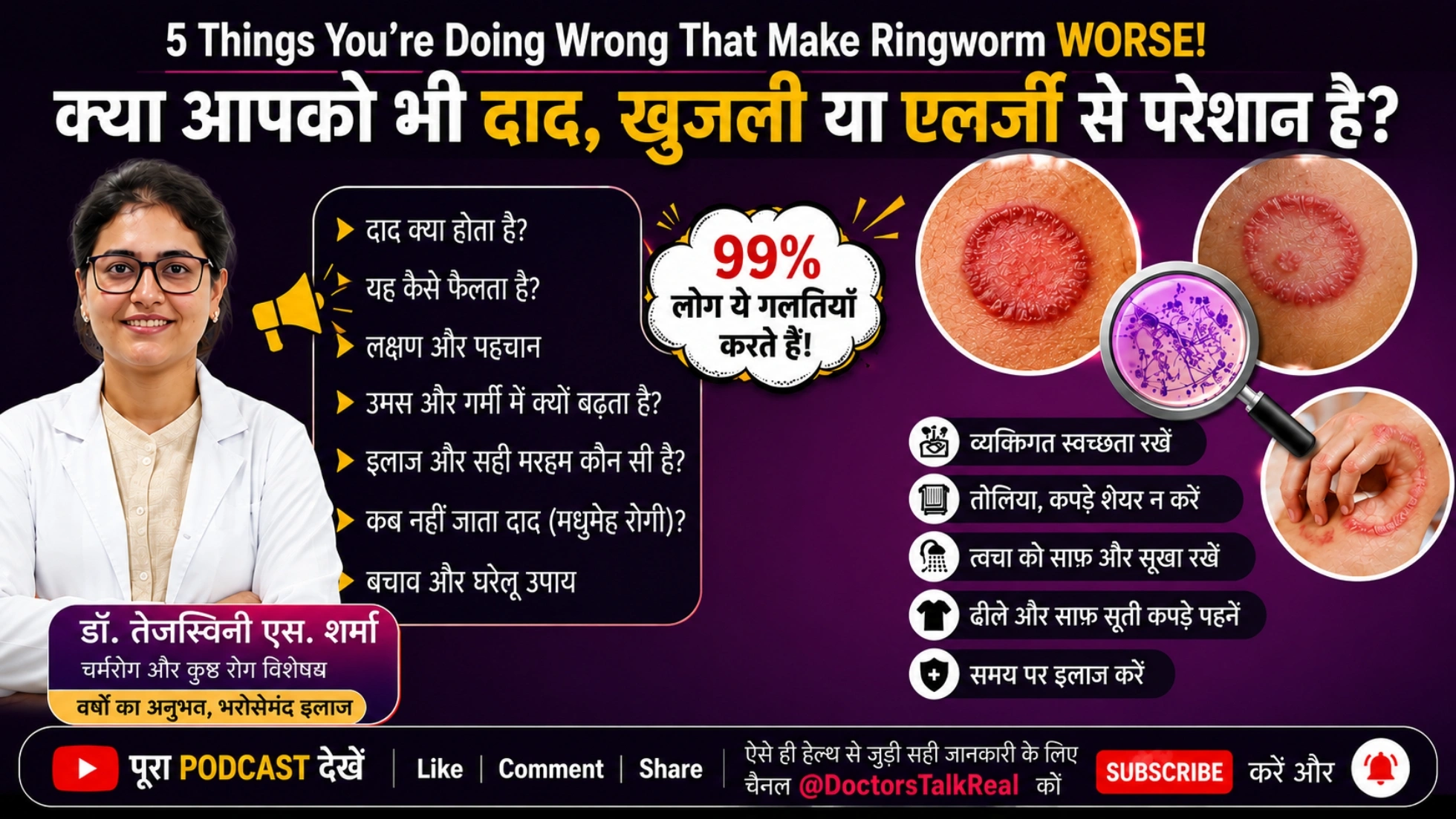
Ringworm, medically known as Tinea Infection, is one of the most common fungal skin infections affecting people of all ages. Despite its name, it is not caused by worms but by a group of fungi called dermatophytes. The infection spreads easily through direct skin contact, contaminated clothing, towels, combs, or even infected pets.
In this informative DoctorsTalkReal podcast, Dr. Tejaswini S. Sharma, an experienced Dermatologist and Leprologist, explains everything about ringworm infection, including its causes, symptoms, treatment, prevention, and why it becomes more common during hot and humid weather.
What is Ringworm (Tinea Infection)?
Ringworm is a contagious fungal infection that affects the skin, scalp, nails, or feet. It typically appears as red, circular, itchy patches with raised borders that gradually expand outward.
Although anyone can develop ringworm, it is more common in people who sweat excessively or live in warm and humid climates.
What Causes Ringworm?
Ringworm is caused by fungi known as dermatophytes, which thrive in warm and moist environments.
Common Causes Include:
- Direct skin-to-skin contact with an infected person
- Sharing towels, clothes, bedsheets, or combs
- Contact with infected pets such as dogs and cats
- Sweating excessively
- Poor personal hygiene
- Wearing tight or damp clothing
How Does Ringworm Spread?
Ringworm spreads very easily through fungal spores.
Common Modes of Transmission
Skin-to-Skin Contact
Direct contact with an infected person is one of the most common ways the infection spreads.
Shared Personal Items
Using infected:
- Towels
- Clothes
- Bedsheets
- Hairbrushes
- Combs
can transfer the fungus.
Pets
Cats and dogs may carry fungal infections without obvious symptoms.
Public Places
Swimming pools, gyms, changing rooms, and public bathrooms may also spread fungal infections.
Symptoms of Ringworm
The symptoms vary depending on the affected body part.
Common Symptoms
- Circular red patches
- Raised borders
- Severe itching
- Burning sensation
- Dry or scaly skin
- Skin peeling
- Cracked skin
- Hair loss (if scalp is affected)
If left untreated, the infection may spread to multiple body areas.
How to Identify Ringworm?
Ringworm usually forms a ring-shaped rash with a clear center and red outer edge.
However, other skin conditions such as eczema, psoriasis, or allergic rashes may look similar.
A dermatologist can accurately diagnose the condition through clinical examination and, if needed, laboratory tests.
Why Does Ringworm Increase During Summer and Humid Weather?
Hot and humid weather creates an ideal environment for fungal growth.
Risk Factors
- Excessive sweating
- Damp clothing
- Poor ventilation
- Tight synthetic garments
- Lack of proper hygiene
Keeping the skin clean and dry significantly reduces the risk.
Who is More Likely to Develop Persistent Ringworm?
Some individuals experience recurrent or difficult-to-treat fungal infections.
High-Risk Groups
- People with diabetes
- Individuals with weak immunity
- Patients taking steroids
- Obese individuals
- People with excessive sweating
- Children and elderly people
These patients should seek medical treatment early.
Treatment for Ringworm (Tinea Infection)
Treatment depends on the severity and location of the infection.
Antifungal Creams
Most mild infections respond well to prescribed antifungal creams.
Oral Antifungal Medicines
Extensive or recurrent infections may require oral medications prescribed by a dermatologist.
Important Advice
Never use steroid-containing creams without medical advice. These creams may temporarily reduce redness but can worsen fungal infections over time.
Home Care Tips for Ringworm
Proper skin care helps speed recovery.
Keep the Skin Dry
Fungi grow rapidly in moist conditions.
Wear Loose Cotton Clothes
Avoid tight synthetic clothing.
Do Not Scratch
Scratching may spread the infection.
Wash Clothes Regularly
Use hot water whenever possible.
Avoid Sharing Personal Items
Never share towels, clothes, razors, or combs.
Can Ringworm Be Prevented?
Yes. Good hygiene plays a major role in preventing fungal infections.
Prevention Tips
- Bathe daily
- Dry skin properly after bathing
- Wear clean cotton clothes
- Change sweaty clothes immediately
- Avoid sharing towels and personal items
- Keep nails trimmed
- Treat infected family members promptly
Expert Advice from DoctorsTalkReal
In this educational DoctorsTalkReal episode, Dr. Tejaswini S. Sharma explains:
- What Ringworm (Tinea Infection) is
- How fungal infections spread
- Common symptoms
- Why infections increase during humid weather
- Treatment options
- Safe antifungal medications
- Patients at higher risk
- Prevention and hygiene measures
Her expert guidance helps patients recognize fungal infections early and seek proper medical care.
Frequently Asked Questions (FAQs)
Is Ringworm caused by worms?
No. Ringworm is caused by fungi, not worms.
Is Ringworm contagious?
Yes. It spreads easily through direct contact and shared personal items.
Can Ringworm heal on its own?
Mild cases may improve, but medical treatment is usually necessary to prevent recurrence and spread.
Why does Ringworm keep coming back?
Recurrence often occurs due to incomplete treatment, poor hygiene, excessive sweating, diabetes, or sharing contaminated items.
Can steroid creams cure Ringworm?
No. Steroid creams may worsen fungal infections and should only be used if prescribed by a dermatologist.
Watch the Complete DoctorsTalkReal Podcast
For accurate information about Ringworm (Tinea Infection), watch the complete DoctorsTalkReal podcast featuring Dr. Tejaswini S. Sharma. Learn about fungal infection symptoms, diagnosis, treatment, prevention, and skin care tips directly from an experienced dermatologist.
Subscribe to DoctorsTalkReal for expert health podcasts, trusted medical advice, and awareness videos on skin diseases and other health conditions.