
Introduction
Many people experience pain, burning, or bleeding during bowel movements and immediately assume it is piles (hemorrhoids). However, these symptoms may also indicate an anal fissure, which is a completely different condition requiring different treatment.
In this health awareness article, Dr. Ankur Sharma (MBBS, MS, FMAS, FIAGES), an experienced Proctologist & Laser Surgeon, explains the difference between fissures and piles, their causes, symptoms, treatment options, and prevention tips.
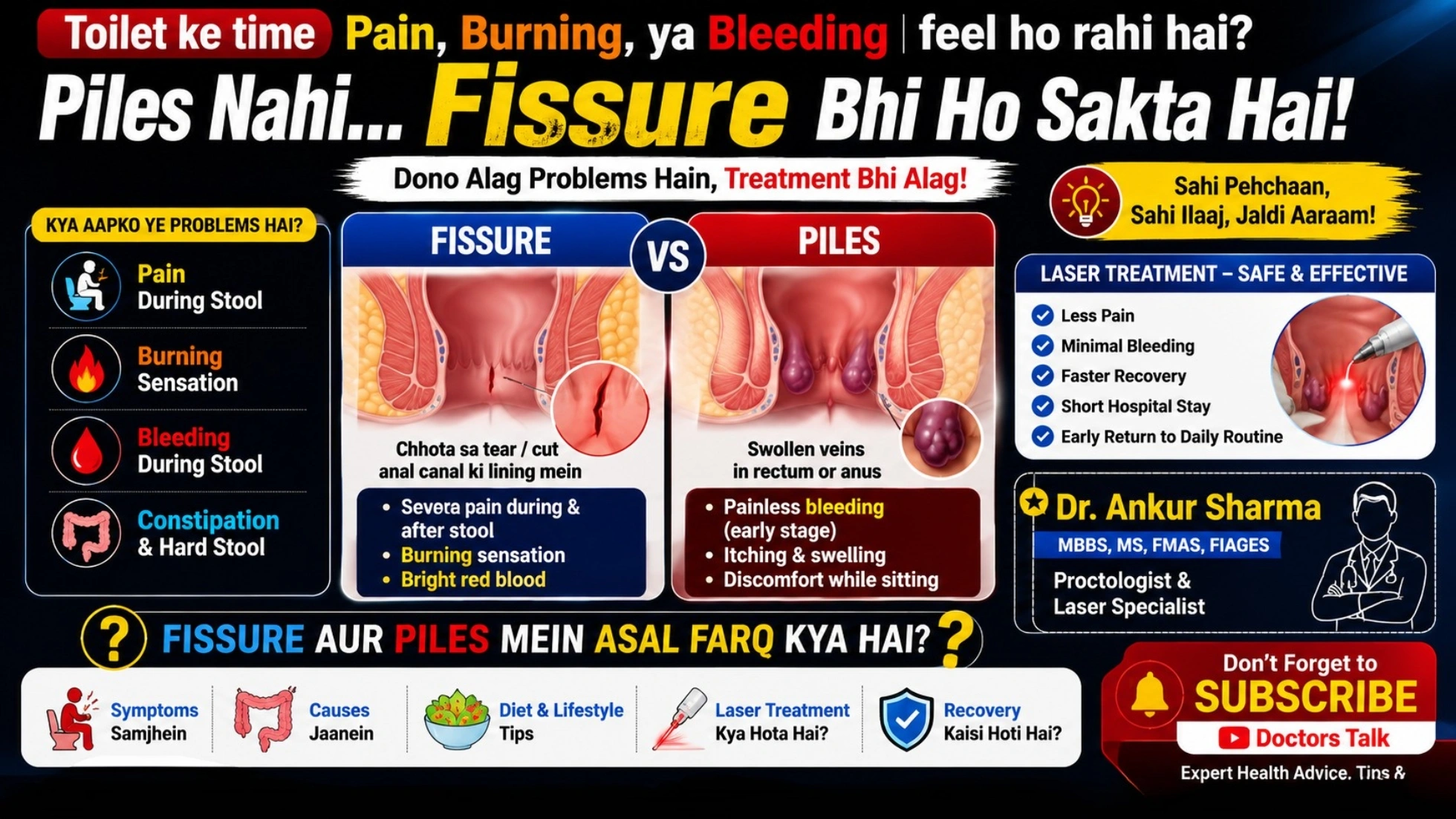
What is an Anal Fissure?
An anal fissure is a small tear or cut in the lining of the anal canal. It usually develops due to the passage of hard stools or chronic constipation.
Unlike piles, a fissure causes intense pain during and after passing stool.
What are Piles?
Piles (Hemorrhoids) are swollen veins in the rectum or anus. They may cause bleeding, itching, swelling, or discomfort while sitting.
Many people confuse fissures with piles because both conditions can cause bleeding.
Fissure vs Piles: What’s the Difference?
| Fissure | Piles |
|---|---|
| Small tear in anal skin | Swollen blood vessels |
| Severe pain during stool | Usually painless bleeding (early stage) |
| Burning sensation | Itching & swelling |
| Caused by hard stool | Caused by constipation, pressure & pregnancy |
| May heal with stool softening | Depends on severity |
Common Symptoms of an Anal Fissure
Severe Pain During Bowel Movement
Pain can continue for several minutes or even hours after passing stool.
Burning Sensation
Many patients complain of intense burning around the anal area.
Bright Red Blood
Fresh blood may appear on toilet paper or in the toilet bowl.
Fear of Passing Stool
Pain makes many patients avoid bowel movements, worsening constipation.
Major Causes of Fissures
Chronic Constipation
Hard stools stretch and tear the anal lining.
Low-Fibre Diet
Poor eating habits make stool dry and difficult to pass.
Inadequate Water Intake
Dehydration contributes to constipation.
Pregnancy
Pressure during pregnancy may increase the risk.
Frequent Straining
Excessive pressure while passing stool can cause fissures.
Common Myths About Fissures
Myth 1: Every bleeding problem is piles.
False. Bleeding can occur due to fissures, infections, or other medical conditions.
Myth 2: Ointments cure every fissure.
Medicines help many patients, but chronic fissures may require advanced treatment.
Myth 3: Surgery always comes back.
Modern laser treatment has excellent outcomes when combined with proper diet and lifestyle changes.
Laser Treatment for Fissures
According to Dr. Ankur Sharma, laser treatment is one of the most advanced options for selected patients.
Benefits include:
- Less pain
- Minimal bleeding
- Faster recovery
- Short hospital stay
- Early return to daily routine
How to Prevent Fissures
Eat High-Fibre Foods
Include fruits, vegetables, whole grains, and salads.
Drink Plenty of Water
Aim for 2–3 litres daily unless advised otherwise.
Avoid Straining
Never force bowel movements.
Exercise Regularly
Physical activity improves digestion.
Treat Constipation Early
Don’t ignore persistent constipation.
When Should You See a Doctor?
Consult a specialist immediately if you have:
- Severe pain during stool
- Bleeding from the anus
- Persistent constipation
- Burning sensation
- Recurrent symptoms
- Difficulty sitting comfortably
Early diagnosis can prevent complications.
Expert Advice from Dr. Ankur Sharma
Dr. Ankur Sharma explains that patients often delay treatment due to embarrassment. However, timely consultation can help avoid complications and provide faster relief through modern treatment options, including laser procedures when required.
Watch the Complete Doctors Talk Podcast
Want to learn directly from Dr. Ankur Sharma?
Watch the complete Doctors Talk podcast to understand:
- Difference between fissure and piles
- Causes of constipation
- Diet tips
- Laser treatment
- Recovery process
- Prevention strategies
Subscribe to Doctors Talk for trusted health awareness videos and expert medical guidance.