
Stroke (Brain Stroke): Symptoms, Warning Signs, Causes & Treatment
Introduction
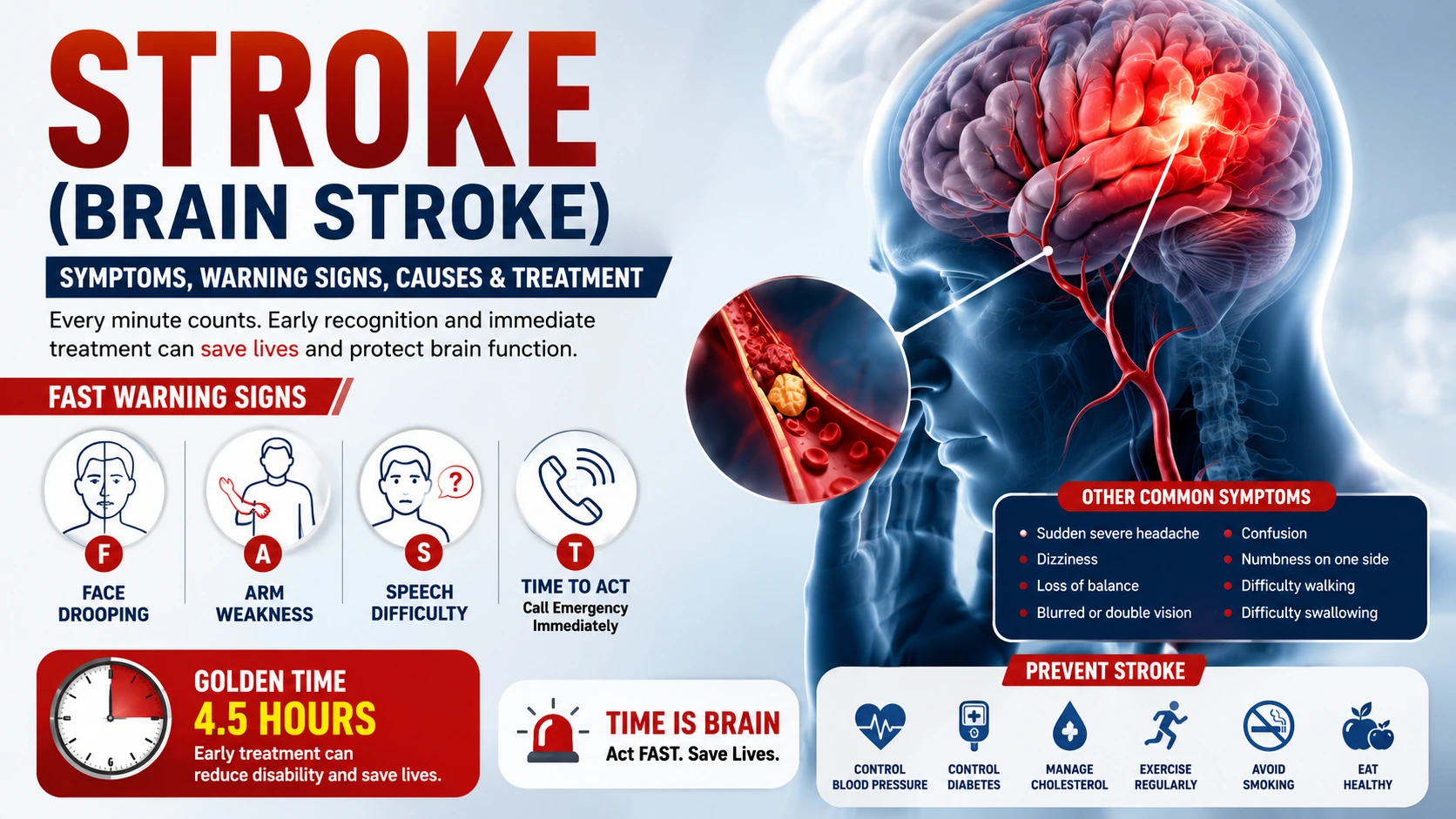
A Stroke (Brain Stroke) is a life-threatening medical emergency that requires immediate treatment. Every minute after a stroke begins, millions of brain cells can be permanently damaged. Quick recognition of the warning signs and reaching the hospital within the Golden Time (4.5 hours) can significantly improve recovery and reduce the risk of permanent disability.
Many people ignore the early symptoms of stroke or mistake them for temporary weakness. Delaying treatment can lead to paralysis, speech problems, memory loss, or even death. Understanding the symptoms and acting quickly can save a life.
What Is a Stroke (Brain Stroke)?
A stroke occurs when the blood supply to a part of the brain is interrupted or when a blood vessel in the brain bursts. Without enough oxygen and nutrients, brain cells begin to die within minutes.
Stroke is considered one of the leading causes of disability and death worldwide. Early diagnosis and emergency treatment are essential for protecting brain function.
Ischemic Stroke
This is the most common type of stroke. It happens when a blood clot blocks an artery supplying blood to the brain.
Common Causes
- Blood clots
- High cholesterol
- Blocked arteries
- Diabetes
- High blood pressure
Hemorrhagic Stroke
This occurs when a blood vessel inside the brain ruptures, causing bleeding into the surrounding brain tissue.
Common Causes
- Uncontrolled high blood pressure
- Brain aneurysm
- Head injury
- Blood vessel abnormalities
Transient Ischemic Attack (TIA)
Also called a Mini Stroke, a TIA causes temporary blockage of blood flow to the brain. Although symptoms disappear within minutes or hours, it is a serious warning sign that a major stroke may occur soon.
Risk Factors for Stroke
You are at higher risk if you have:
- High blood pressure
- Diabetes
- High cholesterol
- Heart disease
- Obesity
- Smoking habit
- Excessive alcohol consumption
- Family history of stroke
- Age above 55 years
- Sedentary lifestyle
What Should You Do During a Stroke?
If someone shows symptoms of stroke:
- Call emergency medical services immediately.
- Take the patient to the nearest hospital without delay.
- Keep the patient calm and comfortable.
- Note the exact time when symptoms started.
- Do not allow the patient to drive.
What Should You NOT Do During a Stroke?
Avoid these dangerous mistakes:
- Do not give water.
- Do not give food.
- Do not give medicines without a doctor’s advice.
- Do not wait for symptoms to improve.
- Do not rely on home remedies.
- Do not delay hospital treatment.
Immediate medical care saves brain cells.
What Is the Golden Time for Stroke?
The first 4.5 hours after the onset of stroke symptoms are called the Golden Time.
During this period, eligible patients with ischemic stroke may receive clot-dissolving treatment, which can significantly improve recovery and reduce disability.
Early hospital arrival greatly increases the chances of successful treatment.
How Is Stroke Diagnosed?
Doctors may recommend:
- Physical examination
- Neurological assessment
- CT Scan
- MRI Brain
- Blood tests
- ECG
- Carotid Doppler Ultrasound
- Echocardiography
Accurate diagnosis helps determine the type of stroke and the most appropriate treatment
Treatment for Stroke Conclusion
A Stroke (Brain Stroke) is a medical emergency where every minute matters. Early recognition of the warning signs using the FAST Method, immediate hospital care, and treatment within the Golden Time of 4.5 hours can save lives and prevent permanent brain damage.
Maintaining healthy blood pressure, controlling diabetes, exercising regularly, avoiding smoking, and following a healthy lifestyle are the best ways to reduce your risk of stroke. If you or someone around you experiences sudden facial drooping, arm weakness, or speech difficulty, seek emergency medical care immediately.