
ACL Tear (Ligament Injury): Symptoms, Causes, Diagnosis & Treatment
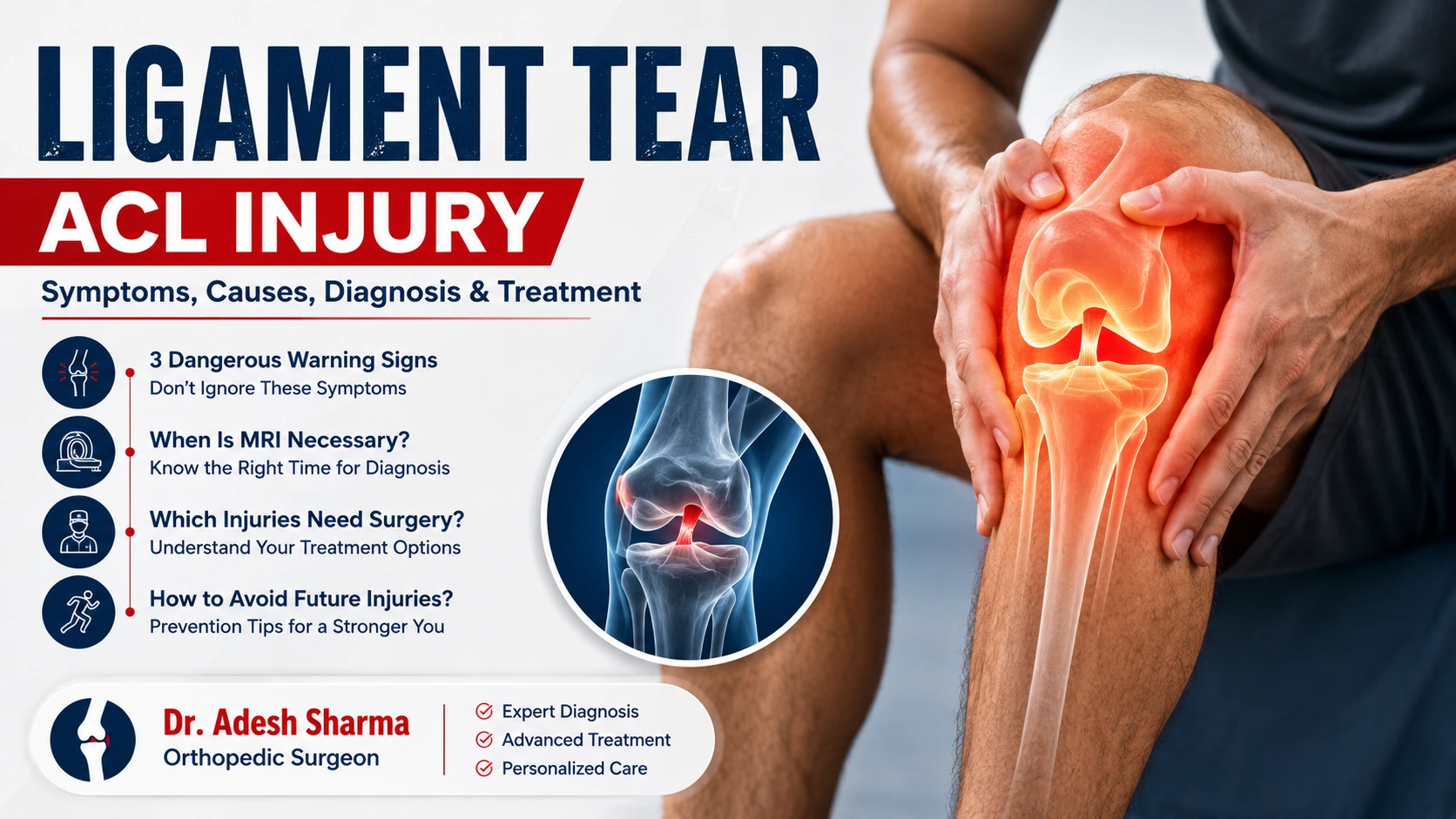
Knee injuries are becoming increasingly common, especially among athletes, gym enthusiasts, and young adults. A sudden twist while playing sports, an awkward landing after a jump, or a road accident can cause serious damage to the ligaments that stabilize the knee. One of the most common ligament injuries is an ACL (Anterior Cruciate Ligament) tear, which can lead to severe pain, swelling, and knee instability if not treated on time. by Dr.Adesh Sharma
Many people mistake a ligament injury for a minor sprain and continue their daily activities, which can worsen the damage. Early diagnosis and proper treatment are essential for a faster recovery and to prevent long-term knee problems .
What Is a Ligament Tear?
A ligament is a strong band of connective tissue that connects one bone to another and helps keep the joints stable. In the knee, four major ligaments provide support, with the Anterior Cruciate Ligament (ACL) being one of the most important.
A ligament tear occurs when the ligament is stretched beyond its normal limit or completely ruptures due to sudden force or twisting of the knee.
What Is an ACL Tear?
An ACL tear is one of the most common sports-related knee injuries. It usually occurs during activities that involve:
- Sudden stopping
- Changing direction quickly
- Jumping and landing incorrectly
- Direct impact to the knee
- Twisting while the foot remains planted
ACL injuries are frequently seen in football, cricket, badminton, basketball, volleyball, and gym workouts.
Symptoms of a Ligament Tear
Common symptoms include:
- Sudden knee pain
- A popping sound at the time of injury
- Rapid swelling around the knee
- Difficulty walking
- Knee instability or giving way
- Limited range of motion
- Pain while climbing stairs
- Difficulty running or playing sports
If these symptoms persist, medical evaluation is necessary.
Causes of Ligament Tears
Ligament injuries may occur because of:
- Sports injuries
- Gym accidents
- Road traffic accidents
- Sudden twisting of the knee
- Falling awkwardly
- Direct blow to the knee
- Poor landing after jumping
- Weak muscles around the knee
Young athletes and physically active individuals have a higher risk of ligament injuries.
Ligament Tear vs Fracture
Many people confuse ligament tears with bone fractures, but they are different conditions.
| Ligament Tear | Fracture |
|---|---|
| Injury to soft tissue | Broken bone |
| Joint becomes unstable | Bone loses continuity |
| MRI is often required | X-ray usually confirms diagnosis |
| May require physiotherapy or surgery | May require casting or surgery |
Both conditions require proper medical evaluation.
Warning Signs You Should Never Ignore
Consult an orthopedic specialist immediately if you experience:
- Knee swelling after an injury
- Inability to bear weight
- Knee repeatedly giving way
- Persistent pain
- Difficulty bending or straightening the knee
- Feeling that the knee is unstable
- Pain that doesn’t improve with rest
Ignoring these warning signs may lead to further damage.
When Is an MRI Needed?
An MRI scan helps evaluate soft tissues such as ligaments, cartilage, and menisci.
Your doctor may recommend an MRI if:
- ACL injury is suspected
- Knee instability is present
- X-ray appears normal but pain continues
- Sports injury is severe
- Surgery is being considered
MRI provides a detailed view of the ligament damage and helps plan treatment.
Diagnosis of Ligament Injuries
Diagnosis usually includes:
- Medical history
- Physical examination
- Knee stability tests
- X-ray to rule out fractures
- MRI scan for ligament injuries
Early diagnosis improves treatment outcomes.
Treatment for Ligament Tears
Treatment depends on the severity of the injury.
1. Rest, Ice, Compression & Elevation (RICE)
Immediately after injury:
- Rest the knee
- Apply ice packs
- Use compression bandages
- Keep the leg elevated
This helps reduce swelling and pain.
2. Medications
Doctors may prescribe pain-relieving and anti-inflammatory medications to reduce discomfort.
3. Physiotherapy
Physiotherapy plays a crucial role by:
- Improving knee strength
- Restoring mobility
- Reducing stiffness
- Preventing future injuries
- Helping patients return to sports safely
4. Knee Braces
A knee brace may provide temporary support during recovery.
5. ACL Reconstruction Surgery
Complete ACL tears often require surgery, especially in:
- Young athletes
- Active individuals
- Patients with repeated knee instability
- Sports professionals
Modern arthroscopic ACL reconstruction is minimally invasive and offers excellent recovery outcomes when followed by proper rehabilitation.
Can Ligament Tears Heal Without Surgery?
Not every ligament injury requires surgery.
Partial tears often improve with:
- Physiotherapy
- Exercise
- Activity modification
- Knee strengthening
However, complete ACL tears frequently require surgical reconstruction for long-term knee stability.
Rehabilitation After ACL Surgery
Recovery usually includes:
- Early movement exercises
- Progressive strengthening
- Balance training
- Walking rehabilitation
- Sport-specific training
Most patients gradually return to normal activities after completing rehabilitation under medical supervision.
How to Prevent Ligament Injuries
Reduce your risk by:
- Warming up before exercise
- Strengthening thigh and leg muscles
- Wearing proper sports shoes
- Learning correct jumping and landing techniques
- Avoiding overtraining
- Maintaining a healthy body weight
- Following proper gym techniques
Prevention is always better than treatment.
When Should You Consult an Orthopedic Specialist?
Seek medical attention if you have:
- Persistent knee pain
- Sudden swelling
- Knee instability
- Difficulty walking
- Injury during sports
- Repeated knee locking
- Limited knee movement
Early treatment can prevent permanent knee damage.
Conclusion
Ligament tears, particularly ACL injuries, are common but highly treatable when diagnosed early. Ignoring knee pain, swelling, or instability can lead to chronic problems and affect your daily life. With timely diagnosis, advanced imaging like MRI, appropriate physiotherapy, and arthroscopic surgery when needed, most patients can return to their normal activities and sports successfully.
If you are experiencing persistent knee pain, instability, or suspect a ligament injury, consult Dr. Adesh Sharma, an experienced orthopedic specialist, for an accurate diagnosis and personalized treatment plan.