
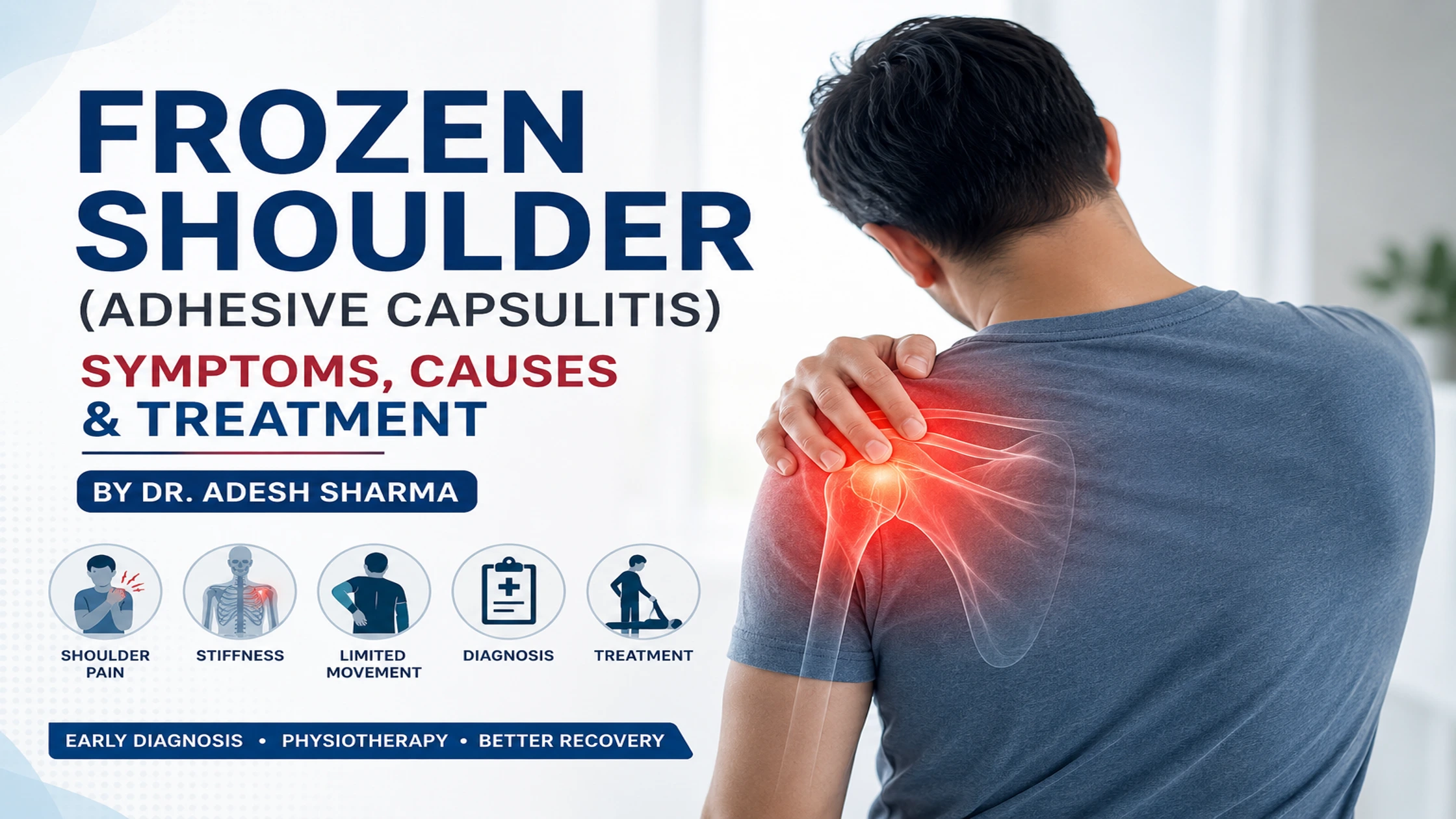
Frozen Shoulder (Adhesive Capsulitis): Symptoms, Causes & Treatment
Shoulder pain and stiffness can make everyday activities like combing your hair, wearing clothes, reaching behind your back, or lifting your arm difficult. If these symptoms persist for several weeks, you may be experiencing Frozen Shoulder (Adhesive Capsulitis). This condition develops gradually and can significantly limit shoulder movement if left untreated. Early diagnosis, proper physiotherapy, and timely medical treatment can help relieve pain, improve flexibility, and restore normal shoulder function.
What Is Frozen Shoulder?
Frozen Shoulder is a condition in which the capsule surrounding the shoulder joint becomes inflamed, thickened, and tight. This leads to progressive stiffness, pain, and reduced range of motion. The condition usually develops slowly and passes through three stages: freezing, frozen, and thawing.
Without proper treatment, the stiffness can last for months or even years, making daily activities increasingly difficult.
Symptoms of Frozen Shoulder
Common symptoms include:
- Pain while lifting your arm
- Shoulder stiffness and tightness
- Difficulty reaching behind your back
- Pain while dressing or combing hair
- Reduced shoulder movement
- Night-time shoulder pain affecting sleep
- Difficulty performing daily routine activities
- Gradual loss of flexibility
Causes of Frozen Shoulder
Several factors can increase the risk of Frozen Shoulder, including:
- Diabetes
- Shoulder injury or trauma
- Shoulder surgery
- Long periods of shoulder immobilization
- Thyroid disorders
- Poor posture
- Rotator cuff problems
- Age between 40 and 60 years
- Lack of regular shoulder movement
People with diabetes and those recovering from shoulder injuries are at higher risk.
How Is Frozen Shoulder Diagnosed?
Diagnosis is usually made through:
- Physical examination
- Assessment of shoulder movement
- Medical history review
- X-ray to rule out bone-related issues
- MRI scan in some cases
Early diagnosis helps in starting treatment at the right time and prevents worsening of stiffness.
Treatment for Frozen Shoulder
Treatment depends on the severity and stage of the condition. Common treatment options include:
Medications
Pain-relieving and anti-inflammatory medicines help reduce pain and swelling.
Physiotherapy
Physiotherapy is one of the most important parts of treatment. It helps improve shoulder movement and reduces stiffness gradually.
Exercises
Guided stretching and strengthening exercises help restore flexibility and mobility.
Injections
Corticosteroid injections may be used in some cases to reduce inflammation and pain.
Surgery
In severe cases where other treatments do not work, arthroscopic surgery may be recommended.
Exercises for Frozen Shoulder
Some commonly recommended exercises include:
- Pendulum exercise
- Finger wall climbing
- Cross-body stretch
- Towel stretch
- External rotation stretch
These exercises should always be done under medical or physiotherapy guidance to avoid worsening the condition.
Prevention Tips
You can reduce the risk of Frozen Shoulder by:
- Staying physically active
- Maintaining good posture
- Doing regular shoulder stretching
- Avoiding long periods of shoulder immobility
- Managing diabetes properly
- Starting early rehabilitation after injury or surgery
When Should You See a Doctor ?
You should consult an orthopedic specialist if you experience:
- Persistent shoulder pain
- Increasing stiffness
- Difficulty lifting your arm
- Pain affecting sleep
- Trouble doing daily activities
- No improvement with home care
Early treatment leads to faster recovery and prevents long-term complications.
Conclusion
Frozen Shoulder is a painful but treatable condition. With early diagnosis, proper physiotherapy, regular exercises, and timely medical care, most patients can recover successfully and regain normal shoulder movement. If you are experiencing ongoing shoulder pain or stiffness, do not ignore the symptoms. Consult a specialist for proper evaluation and personalized treatment to restore pain-free movement.