
Hernia is a common surgical condition that affects millions of people worldwide. While many patients know that surgery is the permanent treatment, they often have several questions regarding mesh, recovery, diet, recurrence, and precautions after surgery.
In this informative DoctorsTalkReal podcast, Dr. Ankur Sharma (Laparoscopic & Laser Surgeon) answers the most frequently asked questions about hernia surgery in simple and easy-to-understand language.
Whether you have been diagnosed with a hernia or are planning surgery, this guide will help you understand everything you need to know.
What is Hernia?
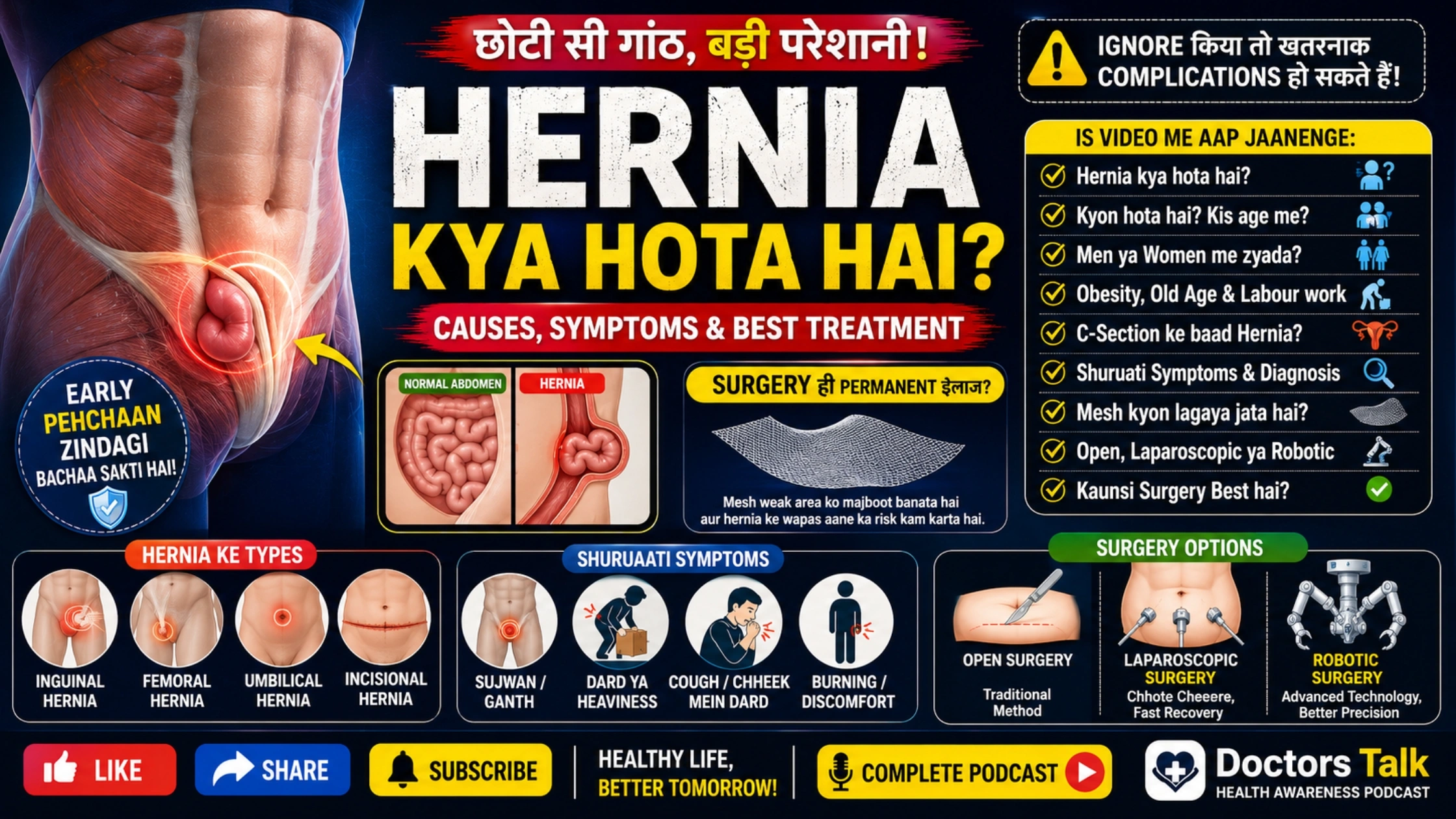
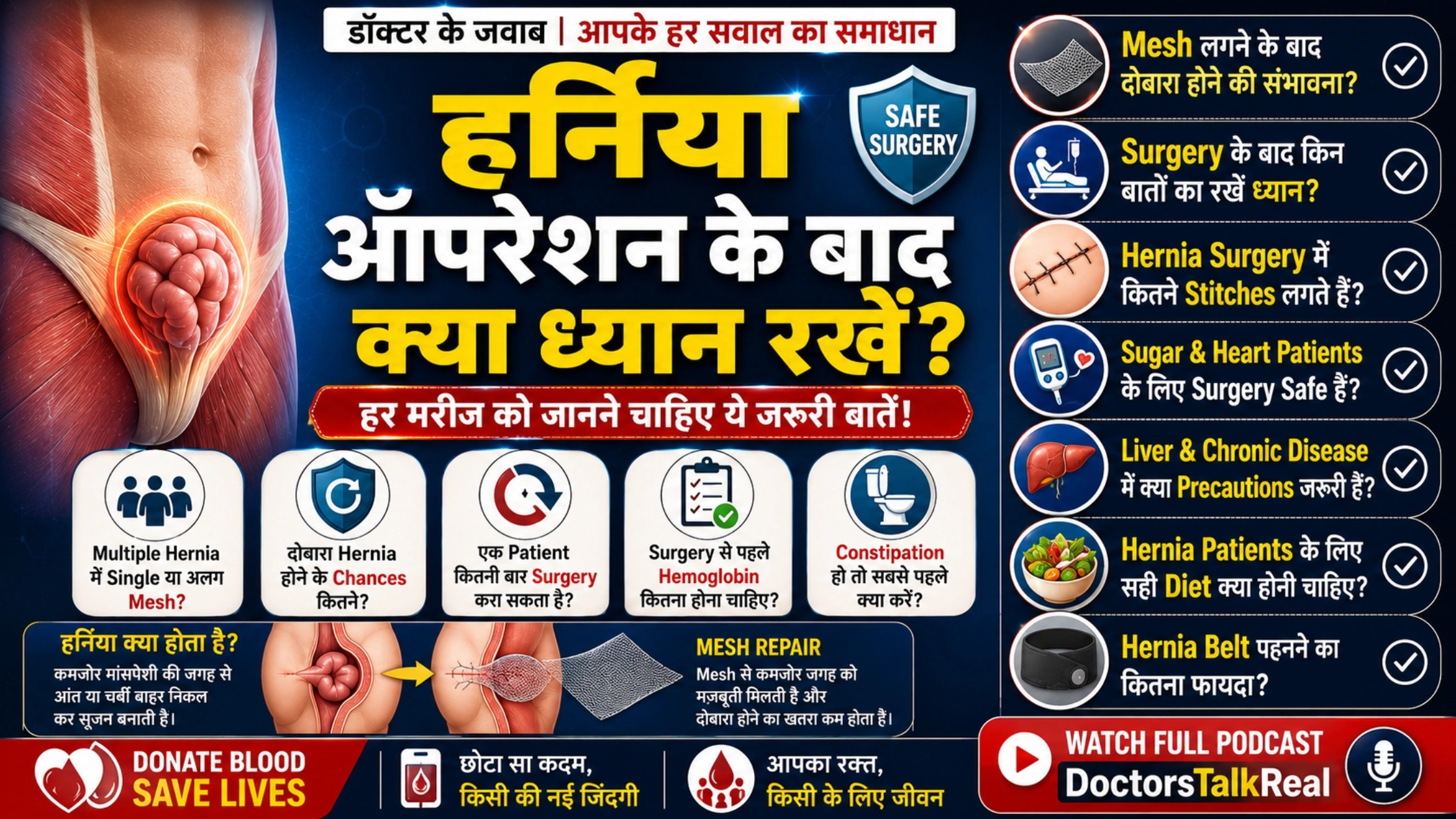
A hernia occurs when an internal organ or fatty tissue pushes through a weak area in the abdominal muscles or surrounding tissues, creating a visible bulge.
Although hernias are not always painful initially, they usually require surgical treatment because they do not heal on their own.
Common Questions About Hernia Surgery
Can Multiple Hernias Be Repaired with One Mesh?
The answer depends on:
- Location of hernias
- Distance between defects
- Size of the hernias
Your surgeon decides whether one mesh or multiple meshes are required after proper evaluation.
Can Hernia Come Back After Mesh Surgery?
Modern mesh repair significantly reduces recurrence.
However, hernia can return because of:
- Heavy weight lifting
- Chronic cough
- Obesity
- Smoking
- Poor healing
- Infection
Following your surgeon’s advice greatly lowers the chances of recurrence.
How Many Times Can Hernia Surgery Be Performed?
If a hernia recurs, repeat surgery is possible.
The surgical technique depends on:
- Previous surgery
- Type of mesh used
- Patient’s health
- Size of recurrence
An experienced laparoscopic surgeon can recommend the best approach.
Recovery After Hernia Surgery
Important Precautions
Recovery becomes faster when patients follow proper instructions.
Doctors generally recommend:
- Avoid lifting heavy objects.
- Walk regularly.
- Eat a high-fiber diet.
- Prevent constipation.
- Stay hydrated.
- Take medicines as prescribed.
- Attend follow-up visits.
How Many Stitches Are Used?
The number of stitches depends on:
- Open surgery
- Laparoscopic surgery
- Robotic surgery
- Size of the hernia
Modern minimally invasive surgery usually requires fewer external stitches and offers faster recovery.
Is Hernia Surgery Safe for Diabetic or Heart Patients?
Yes.
Many diabetic and heart patients safely undergo hernia surgery after proper medical evaluation.
Doctors first optimize:
- Blood sugar levels
- Blood pressure
- Heart function
- Overall fitness for anesthesia
Hernia Surgery in Patients with Liver Disease
Patients with chronic liver disease require extra precautions before surgery.
Doctors evaluate:
- Liver function
- Clotting profile
- Nutrition
- Fluid balance
Proper planning helps reduce surgical risks.
Hemoglobin Before Surgery
Adequate hemoglobin levels improve oxygen delivery and wound healing.
If hemoglobin is low, doctors may recommend treatment before surgery.
Why Constipation Should Be Treated First
Constipation increases abdominal pressure.
Repeated straining can:
- Worsen hernia
- Increase pain
- Delay recovery
- Increase recurrence risk
Maintaining soft stools is an important part of hernia management.
Best Diet for Hernia Patients
Doctors usually recommend:
Eat More
- Fresh fruits
- Green vegetables
- Whole grains
- High-fiber foods
- Plenty of water
Avoid
- Heavy oily foods
- Excess spicy foods
- Constipation-causing foods
- Smoking
- Alcohol (if advised)
A healthy diet supports better healing after surgery.
Does Hernia Belt Help?
A hernia belt may temporarily reduce discomfort.
However,
- It does NOT cure hernia.
- It cannot replace surgery.
- Long-term use without medical advice is not recommended.
Why Early Hernia Surgery is Important
Ignoring hernia may lead to complications like:
- Severe pain
- Intestinal obstruction
- Strangulated hernia
- Emergency surgery
Early diagnosis and planned surgery provide the best outcomes.
Watch the Complete DoctorsTalkReal Podcast
For expert guidance on hernia surgery, mesh repair, recovery, precautions, diet, recurrence, and patient safety, watch the complete DoctorsTalkReal podcast featuring Dr. Ankur Sharma.
Subscribe to DoctorsTalkReal for trusted medical discussions and health awareness videos.