
Introduction
Hernia is one of the most common surgical conditions affecting millions of people worldwide. Many people ignore the early symptoms, thinking it is just muscle pain or weakness. However, delaying treatment can lead to serious complications.
In this Doctors Talk podcast, Dr. Ankur Sharma (MBBS, MS, FMAS, FIAGES) explains everything about hernia in simple language—from symptoms and causes to modern surgical treatment options.
What is Hernia?
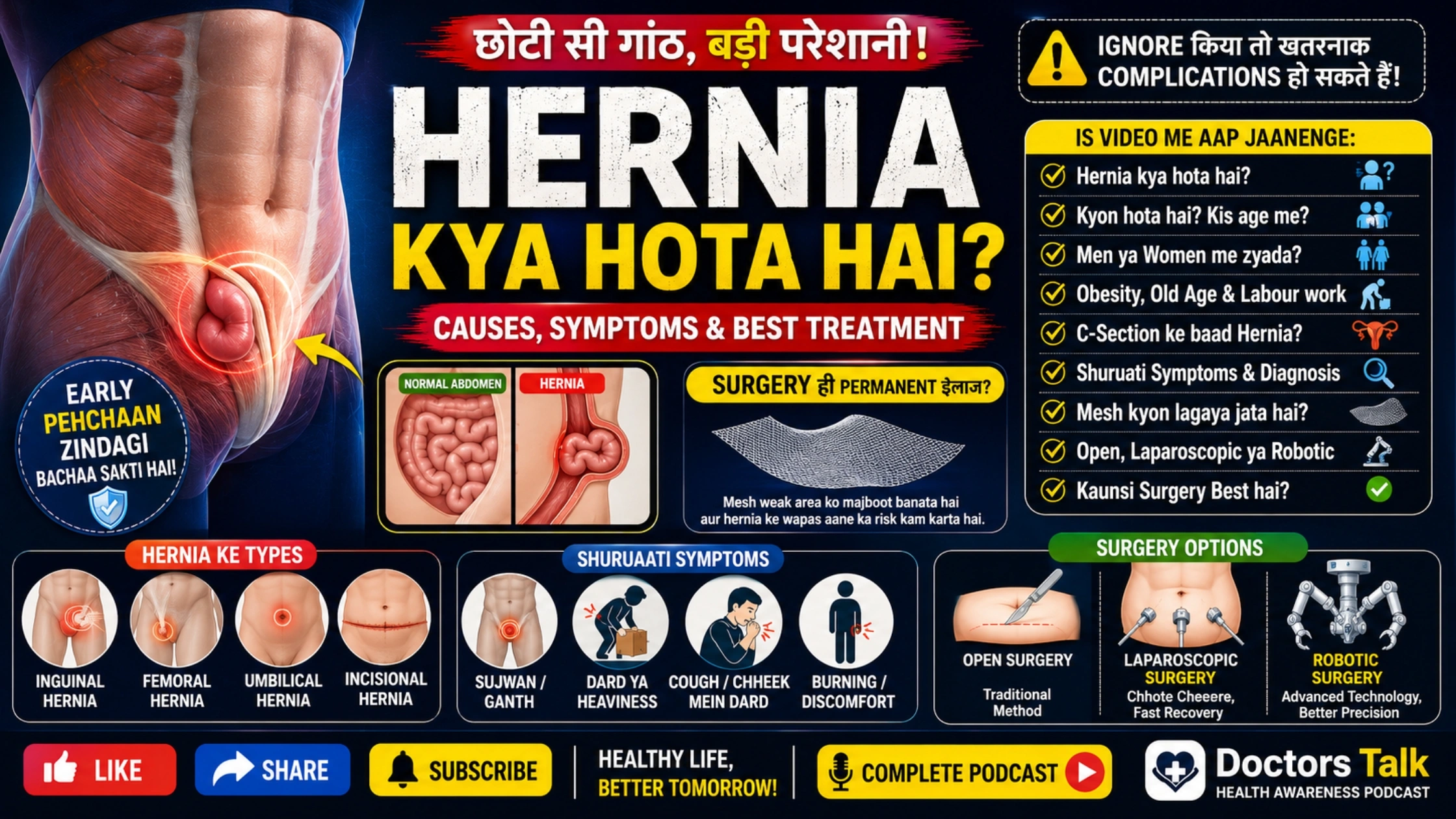
A hernia occurs when an internal organ or fatty tissue pushes through a weak area of the abdominal muscles. It usually appears as a lump or swelling and may become painful while coughing, lifting heavy objects, or standing for long periods.
Hernia does not heal on its own and usually requires surgical treatment.
Common Symptoms of Hernia
Early symptoms include:
- Visible swelling in the abdomen or groin
- Pain while lifting heavy objects
- Burning or pulling sensation
- Discomfort during coughing or sneezing
- Pain after prolonged standing
- Feeling of heaviness in the abdomen
Ignoring these symptoms can increase the risk of complications.
Causes of Hernia
Weak Abdominal Muscles
Weakness in abdominal muscles is the primary reason for hernia.
Heavy Weight Lifting
People involved in manual labor or gym workouts have a higher risk.
Obesity
Extra body weight increases abdominal pressure.
Aging
Muscles naturally weaken with age.
Previous Surgery
Incisional hernia may develop after abdominal surgery or C-section.
Chronic Cough & Constipation
Repeated pressure on abdominal muscles can lead to hernia formation.
Who is More at Risk?
People at higher risk include:
- Elderly individuals
- Obese patients
- Labour workers
- Gym enthusiasts
- Pregnant women
- Patients after abdominal surgery
- People with chronic cough or constipation
Types of Hernia
Inguinal Hernia
Most common in men.
Femoral Hernia
More common in women.
Umbilical Hernia
Occurs near the belly button.
Incisional Hernia
Develops after previous abdominal surgery.
What Happens If Hernia Is Ignored?
Ignoring a hernia can cause:
- Severe pain
- Intestinal blockage
- Strangulated hernia
- Loss of blood supply to the intestine
- Emergency surgery
Early diagnosis prevents these complications.
How is Hernia Diagnosed?
Doctors diagnose hernia through:
- Physical examination
- Ultrasound
- CT Scan
- MRI (when required)
Hernia Treatment Options
Surgery is the only permanent treatment for hernia.
Open Hernia Surgery
Suitable for many uncomplicated cases.
Laparoscopic Hernia Surgery
- Smaller cuts
- Less pain
- Faster recovery
- Early return to work
Robotic Hernia Surgery
Advanced minimally invasive procedure with improved precision.
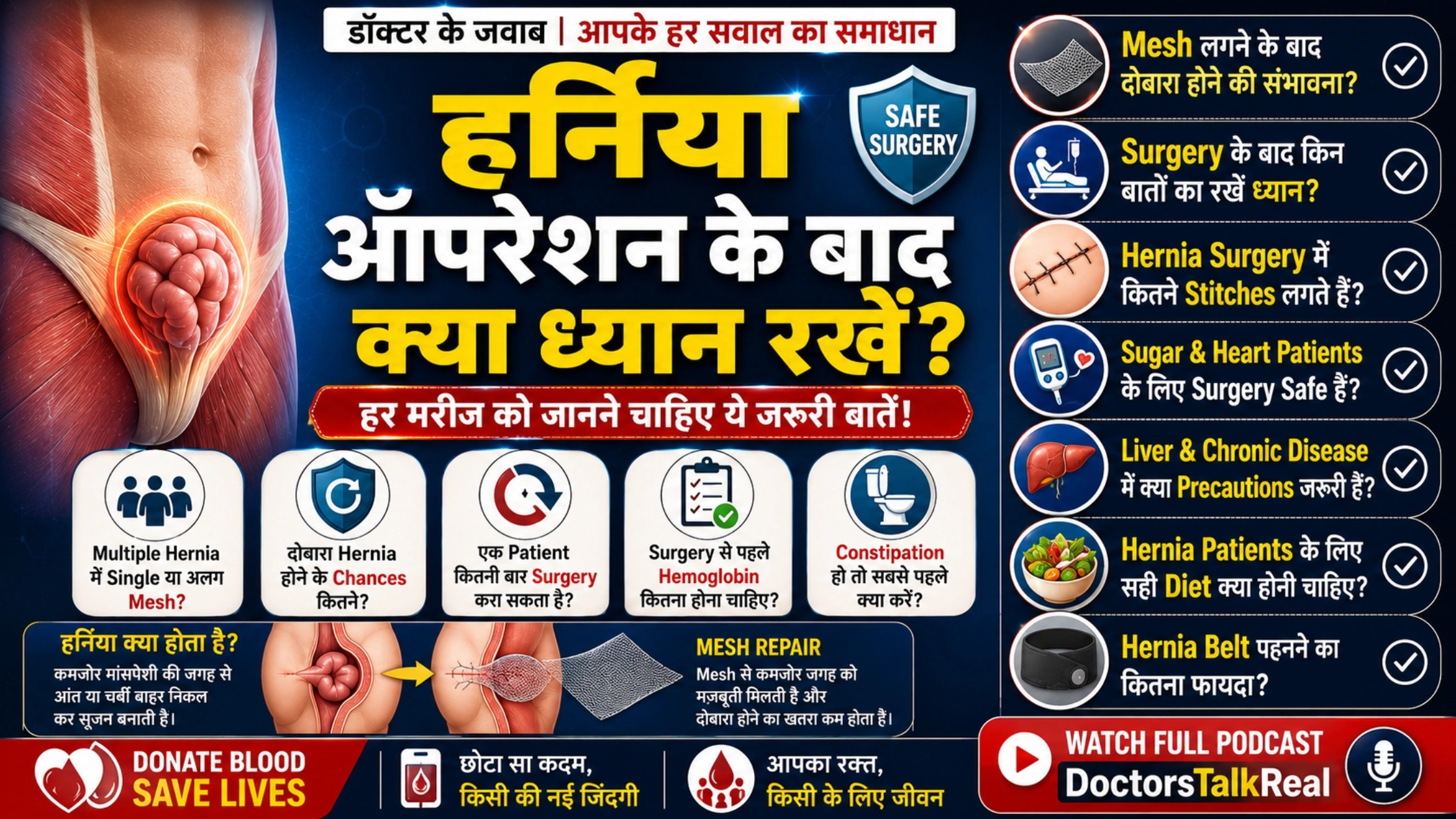
Why is Mesh Used During Hernia Surgery?
A surgical mesh strengthens the weak abdominal wall and significantly reduces the chances of recurrence.
Modern mesh technology provides long-term support with excellent outcomes.
Lifestyle Tips to Prevent Hernia
Maintain Healthy Weight
Reduce pressure on abdominal muscles.
Eat High-Fiber Foods
Prevent constipation.
Avoid Heavy Weight Lifting
Use proper lifting techniques.
Stop Smoking
Reduce chronic coughing.
Exercise Regularly
Strengthen core muscles safely.
Watch the Complete Doctors Talk Podcast
If you want detailed information about:
- Hernia symptoms
- Causes
- Mesh surgery
- Open vs Laparoscopic vs Robotic surgery
- Recovery after surgery
Watch the complete Doctors Talk podcast featuring Dr. Ankur Sharma for expert guidance.