

Introduction
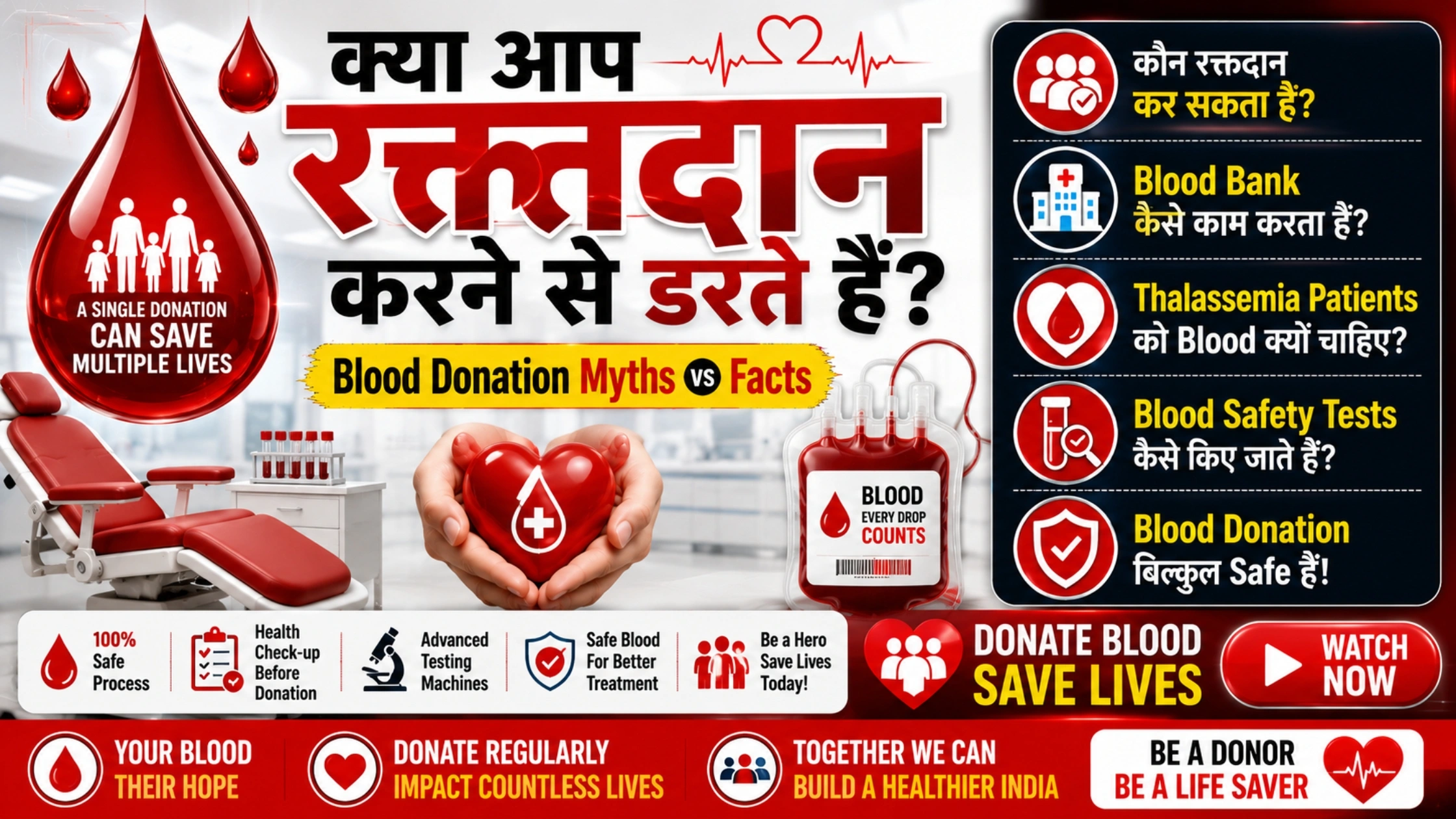
Blood donation is one of the greatest acts of humanity. A single unit of donated blood can save multiple lives during emergencies, surgeries, cancer treatment, childbirth complications, and accidents. Despite the increasing need for blood, India continues to face a shortage because many people hesitate to donate due to myths and misinformation.
In this informative DoctorsTalkReal awareness podcast, Mr. Sanjeev Saraswat, Director of Sadbhawna Blood Bank, explains everything about blood banks, blood donation, donor eligibility, blood safety, and the importance of voluntary blood donation.
What is a Blood Bank?
A blood bank is a specialized healthcare facility where donated blood is collected, tested, processed, stored, and supplied to hospitals whenever patients require blood.
Every donated blood unit undergoes multiple quality and safety checks before it reaches a patient.
Why Blood Donation is Important
Every day thousands of patients require blood because of:
- Road accidents
- Major surgeries
- Cancer treatment
- Delivery complications
- Severe anemia
- Thalassemia
- Organ transplants
Since blood cannot be manufactured artificially, voluntary blood donation remains the only source.
Who Can Donate Blood?
Basic Eligibility
A healthy person can usually donate blood if they:
- Are between 18–65 years old
- Meet the minimum weight requirement
- Have adequate hemoglobin levels
- Are free from serious infections
- Feel healthy on the day of donation
Medical professionals perform a complete health screening before accepting any donor.
Why Do People Fear Blood Donation?
Many people avoid donating blood because of common myths.
Common Misconceptions
Myth 1
Blood donation causes weakness.
Fact: Most healthy people recover quickly with proper hydration and nutrition.
Myth 2
Blood donation is painful.
Only a small needle prick is felt during the procedure.
Myth 3
Blood donation causes diseases.
Blood banks always use sterile, disposable needles, making the procedure completely safe.
How Blood Banks Ensure Blood Safety
Safety is the highest priority in every blood bank.
Each donated blood unit is tested for serious infections including:
- HIV
- Hepatitis B
- Hepatitis C
- Syphilis
- Malaria
Only infection-free blood is supplied to hospitals.
Minimum Hemoglobin Required
Hemoglobin testing is performed before donation.
Adequate hemoglobin ensures that donating blood remains safe for the donor.
What is Jumbo Pack in Blood Banks?
A Jumbo Pack is a specially prepared blood component used in specific medical conditions where patients require concentrated blood components instead of whole blood.
Doctors recommend these packs according to each patient’s medical condition.
What is Thalassemia?
Thalassemia is a genetic blood disorder in which patients cannot produce healthy red blood cells.
Many thalassemia patients require blood transfusions every few weeks throughout their lives.
Regular blood donors play a vital role in saving these patients.
Why Does India Face Blood Shortage?
Several reasons contribute to blood shortages:
Lack of Awareness
Many people are unaware of the importance of voluntary blood donation.
Fear and Misconceptions
False beliefs discourage healthy individuals from donating.
Seasonal Shortages
Blood donation often decreases during holidays, festivals, and extreme weather.
Modern Blood Testing Technology
Modern blood banks use advanced laboratory machines that improve:
- Blood screening accuracy
- Infection detection
- Component separation
- Storage quality
- Patient safety
Technology has made blood transfusions safer than ever before.
Tips Before Organizing a Blood Donation Camp
If you plan to organize a blood donation camp:
- Choose a licensed blood bank.
- Ensure proper medical supervision.
- Arrange clean facilities.
- Encourage voluntary donors.
- Educate participants about eligibility.
- Promote hydration before donation.
Benefits of Blood Donation
Blood donation benefits both society and donors.
For Society
- Saves lives
- Supports emergency care
- Helps cancer patients
- Supports surgeries
- Helps thalassemia patients
For Donors
- Basic health screening
- Sense of social responsibility
- Regular monitoring of health
- Satisfaction of helping others
Watch the Complete DoctorsTalkReal Podcast
For expert guidance on blood donation, blood banks, donor eligibility, blood safety, and public awareness, watch the complete DoctorsTalkReal podcast featuring Mr. Sanjeev Saraswat, Director of Sadbhawna Blood Bank.
Subscribe to DoctorsTalkReal for trusted doctor interviews, healthcare awareness, and medical education.
